Gemini: The AI Powerhouse Dominating Global Search Trends in 2025

Artificial intelligence has been the heartbeat of technological innovation over the past few years, but in 2025, one name has stood above all others and captured the world’s attention: Gemini — Google’s groundbreaking AI system. Its rise was so dramatic that the word “Gemini” became one of the most searched terms globally, reflecting a wave of curiosity, excitement, and rapid adoption across almost every digital sphere.

This article explores why Gemini became such a global phenomenon, how it works, what makes it special, and why its impact will continue shaping industries and everyday life for years to come.


1. What Is Gemini? A New Standard for Artificial Intelligence

Gemini is Google’s next-generation family of AI models designed to be more powerful, more accurate, and more versatile than anything the company has released before. Unlike traditional language models that focus mainly on text, Gemini is fully multimodal — meaning it can understand and generate:

  • Text
  • Images
  • Audio
  • Code
  • Video
  • Complex reasoning tasks

This makes Gemini feel less like a text generator and more like an intelligent digital assistant capable of interpreting the world across multiple formats.


2. Why Is “Gemini” Trending Worldwide?

Gemini didn’t become a global search sensation by accident. Several major factors contributed to its explosive rise:

A. Google Integrated Gemini Everywhere

From Android phones to Chrome, YouTube, Google Search, Gmail, and Docs — Gemini became part of the daily tools used by billions.
When AI becomes this accessible, global curiosity naturally skyrockets.

B. Massive Interest in AI Competition

Millions of users searched for:

  • Gemini vs ChatGPT
  • Gemini vs GPT-5
  • Best AI tools 2025

People wanted to know: Who leads the AI race? Google or OpenAI?

C. Global Shift to AI-Assisted Work

Students, professionals, and businesses now rely heavily on AI. Searches related to:

  • prompts
  • tutorials
  • automation
  • coding help
  • content creation

increased dramatically — pushing Gemini to the top of global trends.

D. Expansion of AI into Everyday Life

AI is no longer just a tech topic; it affects:

  • parenting
  • education
  • creativity
  • business decisions
  • productivity
  • communication

Gemini’s wide applicability made it one of the most discussed innovations of the year.


3. Key Features That Make Gemini Exceptional

1. Multimodal Intelligence

Gemini can analyze images, interpret graphs, break down videos, solve math problems, write creative stories, fix code bugs, and even simulate conversations.
It offers a level of flexibility unmatched by earlier AI systems.

2. Advanced Logical Reasoning

Google designed Gemini to excel in:

  • mathematical reasoning
  • scientific analysis
  • data interpretation
  • multi-step problem-solving

This makes it a valuable tool not just for creativity, but for complex academic and professional tasks.

3. Seamless Integration Across Devices

Gemini lives inside:

  • Google Workspace
  • Android system
  • Pixel devices
  • Search engine
  • Classroom tools

Users experience AI assistance anytime, anywhere — without needing separate apps.

4. Strong Safety and Transparency Measures

Google invested heavily in:

  • safer outputs
  • restricted harmful content
  • clearer explanations
  • improved factual grounding

This gives Gemini a reputation for reliability compared to many other AI tools.


4. How Gemini Is Transforming Industries

A. Education

Students now use Gemini to:

  • explain complex topics
  • summarize textbooks
  • improve writing
  • translate instantly
  • solve math and science questions

Gemini acts like a full-time tutor available at no cost.

B. Business and Marketing

Companies benefit through:

  • automated customer support
  • fast data analysis
  • SEO content generation
  • product descriptions
  • marketing campaigns

This dramatically reduces time and workforce needed for daily operations.

C. Healthcare and Research

Doctors and researchers use AI tools like Gemini to:

  • analyze medical data
  • review research papers
  • generate reports
  • interpret diagnostic images

AI is accelerating the pace of medical innovation.

D. Creative Industries

Writers, designers, and creators rely on Gemini for:

  • content ideas
  • image generation
  • scriptwriting
  • video concepting
  • brand storytelling

Creativity is now faster, easier, and more accessible.


5. Challenges and Ethical Questions

Despite its advantages, Gemini raises important considerations:

  • Could AI replace certain jobs?
  • How can we prevent misinformation?
  • How much personal data will AI systems access?
  • Where do we draw the line between assistance and dependence?

These questions shape global discussions around responsible AI use.


6. The Future of Gemini: What’s Next?

Gemini is still evolving, and experts expect:

  • deeper device-level integration
  • smarter reasoning and personalization
  • expansion into VR, AR, and robotics
  • new models designed for specialized industries
  • even more competition among global AI companies

We are witnessing a transformative moment — the birth of truly universal AI.


Conclusion: A Revolution in Progress

Gemini’s rise to the top of global search trends is a clear sign that the world is entering a new technological era. With its powerful multimodal abilities, deep integration into Google’s ecosystem, and broad usefulness across industries, Gemini is shaping the way we learn, work, communicate, and create.

Its popularity is not a trend — it is the beginning of a new digital chapter.

In 2025 and beyond, Gemini will remain one of the most influential AI tools shaping the future of technology and human productivity.


Why Watching Others Overeat Could Be Ruining Your Diet


The Hidden Impact of Binge-Eating Videos on Health, Weight Loss, and Mental Well-Being

Social media platforms like TikTok and YouTube have popularized a new type of content: binge-eating videos. These videos attract millions of views — some people enjoy watching creators consume massive amounts of food in a single sitting, while others find comfort or curiosity in observing the spectacle.

However, behind the entertainment, binge-eating videos can significantly influence eating habits, weight loss efforts, and overall mental health.


⭐ What Makes Binge-Eating Videos So Popular?

Many psychological and emotional factors drive their rise:

Entertainment and Shock Value

Oversized meals and dramatic consumption draw attention and keep viewers engaged.

Emotional Escape

People dealing with stress, anxiety, or loneliness may find temporary comfort watching others indulge in food.

Social Trends

Challenges such as “10,000 calorie day” or “extreme spicy noodles” make overeating seem fun, even glamorous.

Curiosity and ASMR Attraction

Some viewers enjoy the sounds of chewing or the visual satisfaction of eating large portions.


⚠ The Dark Side: How These Videos Affect Health

While they seem harmless, research and clinical observations reveal several negative impacts:

1️⃣ Normalization of Overeating

Repeated exposure to binge-eating may make excessive portions appear “normal,” especially for teens and young adults.

2️⃣ Hindering Weight Loss Progress

People trying to lose weight may experience:

  • Increased cravings
  • Emotional triggers leading to binge episodes
  • Loss of motivation and discipline

Just “one binge video” can start a cycle of unhealthy eating.

3️⃣ Higher Risk of Binge Eating Disorder (BED)

These videos can worsen or trigger:

  • Food addiction symptoms
  • Secretive eating
  • Guilt–binge emotional loops

4️⃣ Distorted Body Image

Creators often maintain slim bodies despite overeating — viewers may develop a false perception of how food affects weight.


🔍 Mukbang Content: Entertainment or Encouragement of Harm?

Mukbang videos — originally from South Korea — feature hosts eating huge meals while interacting with viewers.
They often:

  • Encourage competitive overeating
  • Promote fast-food-dominant diets
  • Target younger audiences seeking attention and fun

Health experts warn that this trend contributes to rising obesity and eating disorder rates worldwide.


🧠 The Psychological Consequences

Binge-eating content doesn’t affect only the stomach — it affects the mind:

Psychological EffectDescription
Emotional TriggeringEncourages viewers to eat as a response to stress or boredom
Loss of ControlCreates the belief: “If they can eat like this, so can I”
Guilt & ShameViewers may binge then feel bad about themselves
Comparison & Body DissatisfactionUnrealistic influencer bodies worsen self-esteem

🍽 Better Alternatives: Healthier Content to Follow

To protect mental and physical well-being, audiences can shift to more positive content like:

✨ Healthy meal prep tutorials
✨ Fitness and weight-loss journeys
✨ Mindful eating tips
✨ Nutrition education and portion-control guidance

Creators can also help by offering balance: enjoying food without glamorizing overeating.


💡 Pro Tips for Those on a Weight-Loss Journey

Here are simple strategies supported by nutrition experts:

  • Set realistic calorie goals
  • Practice mindful eating — focus on hunger cues
  • Choose balanced meals rich in protein, fiber, and healthy fats
  • Reduce exposure to binge-eating videos
  • Replace emotional eating with hobbies or exercise

Small changes can lead to big results over time.


🎯 Final Thoughts

Binge-eating videos are more than just fun entertainment.
They influence how people think about food, eat food, and view themselves.

Spreading awareness of their hidden effects helps audiences make smarter choices — supporting long-term health, steady weight loss, and a positive relationship with food.


🔑 Recommended SEO Keywords

binge-eating videos, mukbang videos, weight loss, emotional eating, mental health and food, unhealthy eating habits, social media and health


Family Mental Wellness and Self-Improvement: A Guide to a Happier Home


Family Mental Wellness and Self-Improvement: A Guide to a Happier Home

In today’s fast-paced world, families face increasing challenges—busy schedules, academic pressures, financial stress, and constant digital distractions. These factors can affect the mental well-being of every family member. That’s why focusing on family mental wellness and self-improvement is crucial for creating a supportive, loving, and healthy home environment.


What Is Family Mental Wellness?

Family mental wellness refers to the emotional and psychological well-being of all members in a household. A mentally healthy family:

  • Communicates openly and respectfully
  • Supports each other during difficult times
  • Solves problems together
  • Celebrates achievements and growth

When families prioritize mental wellness, children feel safer, adults feel more appreciated, and relationships grow stronger.


Why Self-Improvement Matters in Family Life

Self-improvement is not just a personal journey—it benefits the whole family. When each person works on becoming a better version of themselves, the entire home becomes more positive and balanced.

Self-improvement enhances:

  • Self-confidence
  • Emotional regulation
  • Communication skills
  • Responsibility and independence

Parents who take care of their mental health become better role models for their children. Kids learn by watching—so when they see adults managing stress and learning new skills, they are likely to do the same.


Common Challenges Affecting Family Mental Health

Every household faces obstacles, but some issues require special attention:

  • High levels of stress and burnout
  • Lack of quality time together
  • Misunderstandings and poor communication
  • Social media pressure, especially among teens
  • Behavioral issues in children
  • Financial concerns and future worries

Ignoring these challenges can lead to long-term emotional struggles. Addressing them early helps maintain peace and harmony.


How to Strengthen Family Mental Wellness

You don’t need major changes—small daily habits can transform home life:

1️⃣ Open and Honest Communication

Encourage every family member to express their feelings without fear of judgment.

2️⃣ Quality Time Together

Share meals, play games, or go for walks. Even simple moments build strong connections.

3️⃣ Healthy Boundaries

Set clear rules around screen time, personal space, and responsibilities at home.

4️⃣ Practice Gratitude

Teach children and adults to recognize the positive things in life, no matter how small.

5️⃣ Seek Help When Needed

Talking to a therapist or counselor is a sign of strength—not weakness.


Self-Improvement Activities for Every Family Member

GroupIdeas to Try
ParentsReading, mindfulness, skill learning, time management
ChildrenCreative hobbies, social skills, emotion regulation games
TeensJournaling, sports, volunteer activities, digital balance

Encouraging growth for each person helps the family grow as a whole.


The Power of Emotional Support

Emotionally supportive families build trust, resilience, and lifelong confidence. Children raised in a positive environment often:

  • Perform better academically
  • Build healthier relationships
  • Feel more secure and loved

Adults also experience less anxiety and greater satisfaction in life.


Conclusion

A strong, happy family does not happen by chance—it’s a continuous commitment. By taking care of mental wellness and supporting self-improvement, families build a safe space filled with love, respect, and understanding.

Start small. Listen more. Grow together.
Because when each person flourishes—the whole family thrives. 🌱❤️


How to Improve Family Communication and Reduce Conflicts

The mother and father are at home. The children come back from work and school, and each one goes to their room — or actually, to their phone — into another world full of stories and strangers who give them emotional support, while they ignore the family bond that, if we keep it strong, can replace all those outside hands.

This scene has become very common in our time, but repeating it does not mean it is okay or safe. The lack of communication doesn’t only cause simple problems — it can create a big gap between family members, leading to misunderstanding, repeated conflicts, and negative feelings that grow over time. So… how can we build healthy relationships in the family and support a language of understanding instead of conflict?

The Importance of Family Communication

I am not alone — I have my family.

Good communication at home builds trust and openness between family members. When everyone feels that someone listens to them and respects their opinion, they become calmer and more cooperative. Communication also helps with:

  • Strengthening emotional bonds
  • Teaching children how to express themselves and communicate
  • Creating a safe and supportive environment
  • Reducing stress and daily conflicts


Second: Reasons Why Conflicts Are Common in Families

The reasons differ from family to family, but they are often related to:

  • Always being busy with work or electronic devices
  • Differences in opinions between generations
  • Lack of clear rules at home
  • Negative feelings building up without being expressed
  • Using words or tone of voice in a harmful way during conversations

The more we grow apart and get busy with our own lives, the taller walls we build between our minds and hearts. A simple, casual word someone says can be misunderstood as an insult or offense, causing a conflict that might last for months.


Third: Ways to Improve Family Communication

1. Active Listening
Listening is half of communication. Take time to listen without interrupting or judging. Children, spouses, or parents always need someone who understands their feelings before giving advice.

2. Use Kind and Respectful Language
Harsh words can leave a long-lasting effect. Choosing positive words and respectful language helps calm any discussion.

3. Spend Regular Family Time
Shared meals, weekly walks, or even watching a movie together… simple moments that build strong memories and reduce the chance of conflicts.

4. Set Clear Rules
Organizing sleep schedules, device usage, and household responsibilities… agreed-upon rules reduce daily friction and stress.

5. Express Feelings Calmly
Instead of exploding with anger:

  • Explain your feelings
  • Share what bothers you
  • Suggest an alternative solution

6. Solve Problems Together
Working together to find solutions makes everyone feel part of the decision, not forced.


Fourth: The Role of Technology — Positive or Negative?

Although electronic devices give us many ways to communicate, paradoxically, they can separate family members. So it’s important to:

  • Have phone-free times
  • Encourage direct conversations
  • Use technology in shared activities when needed

Fifth: When to Consult a Professional

If conflicts are frequent and affect the mental health of family members or children, seeking help is not a weakness — it’s a smart step toward a healthier and more balanced family life.


Conclusion
Communication is not just exchanging words; it’s feeling safe, loved, and connected. The more we listen, understand, and speak respectfully, the more our home becomes a supportive place full of warmth, and conflicts decrease significantly.

Start today with a simple step: listen, smile, and speak with your heart before your words.
Family is the place we must always protect, keep warm, and united ❤️

We need each other to grow, to get stronger, and to flourish. 🌱


When the Sea Speaks at Midnight — The Purple-Eyed Bird

It was twelve o’clock at night — a cold,

dull night with no events, no news,

and no sign of life in this old neighborhood.

No laughter, no tears, nothing but a painful silence — the very essence of nothingness.

A feeling too vague for the mind to grasp, yet so heavy that it filled her chest.

A feeling without feeling.

She desperately tried to prove that her mind still held stories worth telling — that it hadn’t lost its spark. But that mind…

it had seen too much, lived what it shouldn’t have lived,

and carried memories that left no calm space for imagination.

Had it surrendered to the bitter truth?

To the weary memories that pushed it toward isolation?

She closed her draft document, took a deep breath,

wore a light coat over her pajamas, and stepped outside for a walk in her quiet seaside village.

She had chosen this faraway village for a reason — where, at midnight, she could walk without a headscarf. No one was out.

No one at all.

People appeared only with the first breeze of dawn… but now?

The streets were utterly empty.

The village was inhabited mostly by the elderly.

If she ever saw a young person — or even a child — it felt like spotting a rare creature.

When she visited the small shops for daily supplies, they stared at her as if she had stepped out of a fairy tale — a princess who escaped her book, or a witch who stayed young by devouring humans.

She walked on, fighting the cold and her fear of darkness, heading toward the only thing that still made sense: the sea and the eerie calmness surrounding it…

a silence foretelling misfortune.

She reached the pitch-black horizon — the sky’s darkness mirrored in the water below, creating a double abyss. Clouds deepened both shades into suffocating fear.

A sudden urge to touch the water overtook her.

She stepped forward in disbelief, entering the freezing sea, shivering from cold and fear…

yet something unseen urged her to keep going.

The water reached her waist when she saw it — a massive, glowing structure unlike any vessel she had seen. Not here. Not anywhere in the world.

She should have run back home, shut herself under her blankets and slept…

but this was the night she had given up on life — the night she felt the terrifying pull of disappearing from this world.

So she climbed the long metallic stairs leading up to a closed, electronic door.

The moment she laid her hand on it, the door opened from within.

Warmth enveloped her instantly.

Comforting warmth. But the moment was short-lived — the door shut behind her with a sharp sound. Locked.

She walked forward, following the warmth that began lulling her into a sudden desire for sleep. Maybe this was just a dream…

one that would end soon, returning her to her desk after a short nap.

Then she saw it — a grand door like the entrance of a palace.

Would it open if she touched it?

It did. And it closed again behind her.

It didn’t matter.

Nothing mattered that night.

She stepped inside — a home.

The exact home she had wished for since childhood.

That warmth… that beauty… that impossible feeling of belonging.

And just like that, her mind forced her to remember why she had tried to escape reality tonight — to write her past and its lingering wounds.

Tears fell uncontrollably.

She walked closer to the source of heat…

and there she found a white bird, its wing injured and stained with blood.

She approached carefully, held it in her hands, sat down, and rested her back against a chair.

For the first time ever, she felt no fear — not of the strange bird, nor of the blood dripping from its feathers.

She began telling the bird about one of her heartbreaks. As she spoke, a tear fell onto its head…

The bird trembled violently, slipping from her hands to the floor — and her body froze in terror.

Human arms… then legs… appeared.

And within seconds, a young man lay there — tall, broad-shouldered, with skin pale as moonlight and jet-black hair. He was in pain, bleeding from his left shoulder. A weak voice escaped his lips:

“No… don’t be afraid of me. Please… I need your help.”

She sat on the chair, unable to comprehend whether this was a dream or a piece of the terrifying night she was living. Help? What kind of help could she offer in such a deserted place? She was in the middle of the sea… aboard a colossal, hidden vessel.

Then he raised his head — and opened his eyes.

Purple.

Eyes surrounded by long black lashes — eyes so beautiful that she fell in love at first sight. She whispered “Oh God…” under her breath, unable to look away.

He looked shocked as well — yet his plea for help did not fade.

And in that moment… she realized this night was not about running away from life.

It was about finding a secret that could bring her back to it.

🗓️ How to Organize Your Life with Daily, Weekly, and Monthly Tasks — The Secret of Smart Planning!


In today’s fast-paced world filled with endless responsibilities, daily planning and time management have become essential for anyone seeking balance and success. Between work pressure, family duties, and personal ambitions, progress is impossible without organizing your daily, weekly, and monthly tasks in a thoughtful, structured way.


🌞 First: Daily Tasks — The Foundation of Productivity

Daily tasks are the small actions you perform every day, forming the building blocks of any major achievement.
Examples include:

  • Making your bed and tidying your room in the morning.
  • Reading for 15 minutes.
  • Checking and replying to emails or completing work-related tasks.
  • Exercising or walking for half an hour.
  • Spending time with family or reflecting before bedtime.

🔹 Tip:
Start your day by listing just three main priorities. Write them down in a notebook or task app, and you’ll end the day with a rewarding sense of accomplishment.


📅 Second: Weekly Tasks — A Broader Perspective and Balanced Routine

Weekly tasks help you see the bigger picture of your life and distribute your time wisely between work and rest.
Examples include:

  • Preparing a grocery list and cleaning your home.
  • Planning a family gathering or a leisure activity.
  • Reviewing the goals achieved during the past week.
  • Planning next week’s work or study schedule.
  • Exploring a new hobby or attending a short training course.

🔹 Tip:
Choose a fixed day each week (such as Friday or Saturday evening) to review your progress and plan for the coming week.


📆 Third: Monthly Tasks — Evaluation and Self-Development

Monthly tasks represent a period of reflection and improvement. They allow you to assess your performance and set new goals.
Examples include:

  • Reviewing your monthly expenses and creating a new budget.
  • Tracking progress in your health, fitness, or learning goals.
  • Doing a deep home or workspace clean-up.
  • Planning a new project or a short trip.
  • Writing a summary of your main achievements and lessons learned.

🔹 Tip:
At the end of each month, take time to reward yourself for your efforts — even a small celebration helps you stay motivated for the next month.


🧭 The Importance of Daily Planning

Daily planning is not just about making a to-do list — it’s a way of life that organizes your thoughts and boosts your mental energy.
Here are some of its key benefits:

  1. Focus and clarity: You know exactly what to do first, reducing distractions.
  2. Higher productivity: You complete tasks faster and more efficiently.
  3. Better time control: You identify time-wasting habits and manage your day wisely.
  4. Peace of mind: Feeling in control reduces stress and anxiety.
  5. Long-term achievement: Breaking big goals into smaller tasks makes success more attainable.

🔹 Real-life example:
If your goal is to learn a new language in six months, plan to study 15 minutes daily, review weekly, and test yourself monthly. Step by step, your dream becomes a reality.


💡 Conclusion

Success doesn’t happen by chance — it’s the result of consistent and organized planning.
Make your daily schedule a flexible roadmap that combines work, rest, and personal growth.
Over time, you’ll realize that every small task is a steady step toward a more balanced and fulfilling life.


When the Mind Falls Silent: How to Protect Your Mental Health in a Fast-Moving World


In the hustle of daily life, stress builds up, responsibilities overlap, and one crucial aspect often gets overlooked — mental health. Many of us feel that anxiety or tension has become part of who we are, or we struggle to tell when a feeling is “normal” and when it deserves attention.
This article takes you on a journey through what mental health truly means — its importance, warning signs, causes, and practical strategies you can apply every day. The goal is simple: to help you build awareness, take action, and realize that your mental well-being deserves care just as much as your physical health.


Why Mental Health Matters

  • Mental health is not merely the absence of illness — it’s a state of well-being that enables you to cope with life’s challenges, work productively, and contribute to your community.
  • When neglected, it affects relationships, work performance, sleep, and even physical health.
  • With the massive search volume for terms like “mental health,” “anxiety,” and “depression,” it’s clear that this is not a secondary issue — it’s central to human life.
  • Because it falls under Google’s Your Money or Your Life (YMYL) topics, trustworthy, experience-based content is key to visibility and credibility.

Signs Your Mental Health Needs Attention

These are not diagnoses, but warning indicators worth noticing:

  • Persistent mood changes: ongoing sadness, growing anxiety, or sudden anger.
  • Difficulty concentrating, irregular sleep patterns, or appetite changes.
  • Withdrawal from activities you once enjoyed.
  • Constant fatigue or loss of interest in life.
  • Thoughts of worthlessness, hopelessness, or self-harm — in which case, seek immediate help.
  • Keywords like “signs of depression” and “anxiety relief techniques” are also among the most searched phrases online — showing how common these struggles are.

Why Stress Feels Heavier Today

  • Fast-paced lifestyles and blurred lines between work and personal life create constant pressure.
  • Social media amplifies comparison, fueling feelings of inadequacy.
  • The lack of quiet moments for rest or reflection strengthens the voice of inner tension.
  • Whether you or someone close to you — all of us can take small steps toward change.

Practical Strategies to Strengthen Mental Health

1. Self-Awareness and Reflection

  • Spend even 5–10 minutes daily just pausing — breathe deeply and observe what you’re feeling.
  • Keep simple notes: when did you feel stressed? what triggered it? how did you react? Awareness leads to control.

2. Prioritize Sleep and Social Support

  • Regular sleep and a peaceful environment boost emotional balance.
  • Talk to someone you trust — sharing your thoughts lightens the load and offers perspective.

3. Stay Active and Eat Balanced Meals

  • Physical activity releases brain chemicals that lift your mood.
  • Eat nutritious meals and avoid excessive caffeine or anything that disrupts sleep.

4. Practice Relaxation and Mindfulness

  • Try meditation, deep breathing (like the 4-7-8 method), or light exercise such as walking.
  • Audit your digital space: unfollow content that fuels anxiety or comparison.

5. Set Clear Boundaries

  • Define time zones for work and rest, especially if you work remotely.
  • Learn to say “no” when your limits are reached — it’s not selfish, it’s self-protection.

6. Seek Professional Help When Needed

  • When stress feels unmanageable, seeking professional support is an act of courage, not weakness.
  • A therapist or counselor can guide you toward recovery and resilience.


Conclusion

Remember: your mental health is not a luxury — it’s a necessity.
Just as you care for your body, care for your mind and emotions. Progress starts with small, consistent steps — reading, feeling, and acting toward better mental balance.
Let today be your turning point: pause, reflect, and take one step toward a healthier, calmer you.


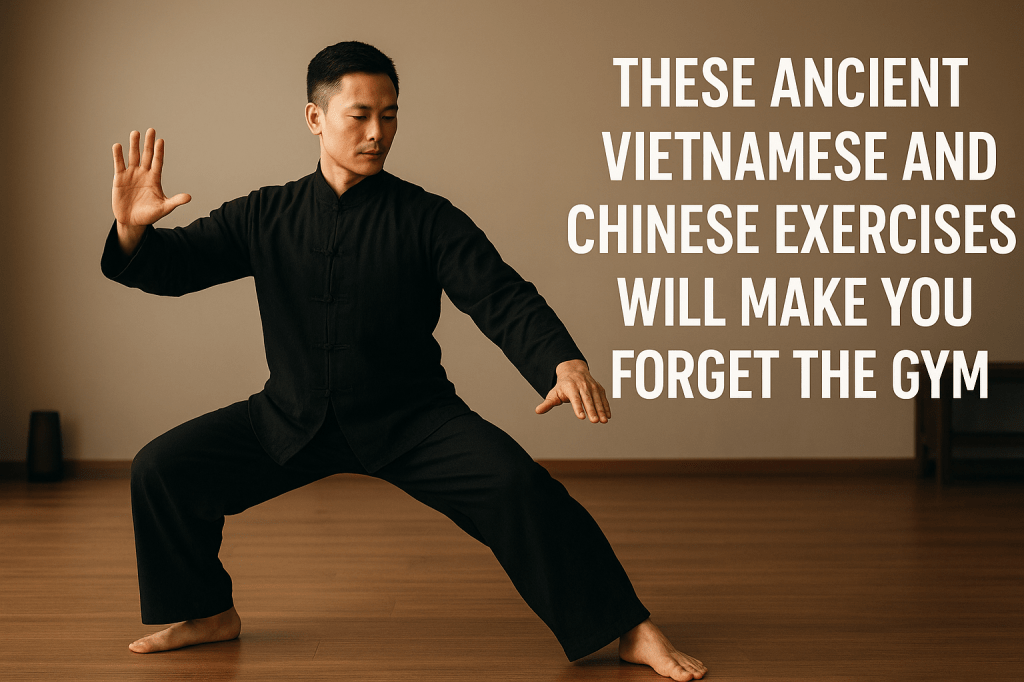
These Ancient Vietnamese and Chinese Exercises Will Make You Forget the Gym — Discover the Secret to Deep Fitness and Unbreakable Mental Power

Tired of the gym? Discover the ancient Vietnamese and Chinese exercises that blend movement, breathing, and mindfulness to transform your body and mind. Build strength, flexibility, and calm through the timeless wisdom of Tai Chi, Qi Gong, and Vietnamese energy training.


🧘‍♂️ Ancient Vietnamese and Chinese Exercises: The Secret to Deep Fitness and Unbreakable Mental Energy

In an age where modern workouts focus on speed and quick results, ancient Vietnamese and Chinese exercises bring us back to the roots — where movement was a path to harmony, awareness, and lasting strength.
These ancient practices do not only strengthen the body; they purify the mind and awaken the inner energy, giving you a rare balance between power, calmness, and complete mind-body awareness.


🌿 What Are Ancient Vietnamese and Chinese Exercises?

They are systems of physical and breathing practices developed over centuries in East Asia, including:

  • Quan Khi Cong (Vietnamese): a blend of martial arts and deep breathing exercises.
  • Tai Chi (Taiji): slow, flowing movements performed with full concentration on breathing and balance.
  • Qi Gong: a practice aimed at awakening and circulating the body’s internal energy, known as “Qi.”

These disciplines are not just forms of exercise — they are philosophies of life, teaching you to control your energy, emotions, and body as one harmonious unit.


💨 The Power of Breath: Life in Every Movement

One of the greatest secrets of these ancient systems is the art of conscious breathing.
Each movement is synchronized with a precise rhythm of inhalation and exhalation designed to:

  • Increase oxygen flow in the blood.
  • Calm the nervous system.
  • Improve mental focus.
  • Release stored tension and emotional stress.

When you master your breathing, your body transforms into a system of clarity and energy — no stress, no exhaustion, just harmony between breath and motion.


🧠 Mental Toughness: Training the Mind Before the Body

Ancient Vietnamese and Chinese exercises are known for building mental resilience — the ability to stay calm and focused under pressure.
Through slow, mindful repetition, the brain learns discipline, patience, and presence.
This inner stillness becomes your greatest strength, allowing you to face challenges with composure and mental power.


⚖️ Benefits That Extend Beyond the Body

  1. Improved balance and joint stability
  2. Enhanced spine flexibility and blood circulation
  3. Reduced stress and anxiety through mindful breathing and movement
  4. Activated nervous system for sharper focus and emotional clarity
  5. Better sleep and internal health through regulated energy flow

These are not just exercises — they are a holistic lifestyle that restores your natural state of balance and vitality.


🔥 From Ordinary to Extraordinary

By practicing these ancient movements daily, you’ll experience profound transformation:

  • Your breathing becomes deeper, your movements more intentional.
  • Your energy renews itself, even after long, tiring days.
  • Your mind becomes unshakable, calm, and confident.

It’s a journey from body to spirit, from chaos to clarity, from fatigue to inner strength.


⚠️ Consistency Is the True Secret

Eastern philosophy teaches that the key is not in intensity, but consistency.
Start with just five minutes a day. Focus on your breath, your posture, and your presence.
Gradually, you’ll move toward a new level of physical and mental fitness you never thought possible.


🌸 Conclusion: A New Energy for a New Life

Ancient Vietnamese and Chinese exercises are not relics of the past — they are timeless wisdom for modern life.
Through mindful breathing and deliberate movement, you’ll awaken your inner power and rediscover your natural balance.
Start today, take one mindful step, and let your body guide you toward a completely new level of energy, calmness, and mental strength.


Why You Should Count Calories: For Smarter Nutrition, Stronger Health, and Healthier Skin


🥗 The Benefits of Calorie Counting: Not Just for Weight Loss, But for Understanding Your Food and Nourishing Your Skin

Many people believe that counting calories is only for those who want to lose weight, but the truth is far broader. This habit can be a powerful tool for understanding our relationship with food, improving overall health, and even achieving radiant, healthy skin from within.


🔹 What Is Calorie Counting?

Calorie counting means tracking the amount of energy we get from foods and drinks each day, usually through apps or nutritional charts.
But it’s not just about the number — it’s about understanding the quality of those calories: where your energy comes from — protein, fats, or carbohydrates.


🍽️ 1. A Deeper Awareness of What You Eat

When you start logging your meals, you’ll discover that some “light” foods are loaded with hidden fats and sugars — and others are healthier than you thought.
Tracking your intake builds real nutritional awareness, helping you understand what’s actually in your meals.
Over time, you’ll develop intuitive knowledge — you’ll know how much sugar is in a glass of juice or how much protein is in a piece of chicken breast.
This awareness empowers you to make smarter daily food choices without constant calculations.


💪 2. Tracking Protein and Vitamins for a Balanced Body

The goal isn’t just to know your total calories — it’s to analyze their nutritional breakdown.
By tracking your protein, vitamins, and minerals, you can ensure your body gets what it truly needs.

  • Protein supports muscle growth and cell repair.
  • Vitamins and minerals strengthen your immune system, hair, nails, and skin.
  • Healthy fats (like omega-3s) keep your skin flexible and reduce inflammation.

In this way, calorie counting becomes a method for improving the quality of your diet, not just the quantity.


3. Glowing Skin from the Inside Out

We often associate skincare with creams and serums, but true beauty starts from within.
When you make sure you’re getting enough protein and key vitamins like vitamin C, E, and zinc, you’ll notice visible improvements in your skin’s glow and elasticity.
A balanced diet, supported by calorie tracking, ensures your skin gets the nutrients it needs to stay vibrant and youthful.


Counting calories isn’t just about dieting. It’s about learning what your body truly needs — from protein and vitamins to healthy fats — for lasting energy, beauty, and well-being.

📅 4. A Temporary Habit with Lasting Results

The great thing about calorie counting is that it’s not a lifelong commitment.
After a few months of consistent tracking, you’ll build a strong nutritional memory.
You’ll naturally know how to balance your meals without needing to log everything.
It’s a short-term educational habit that leads to long-term health awareness.


⚠️ The Drawbacks of Calorie Counting (When Overdone)

Despite its many benefits, calorie counting can have downsides if taken to extremes:

  1. Food anxiety: Over-focusing on numbers can cause stress and obsession.
  2. Ignoring food quality: Some may prioritize “low-calorie” options while neglecting nutrient-rich foods.
  3. Losing the joy of eating: Constant counting can make meals feel like math instead of pleasure.

The key is balance — use calorie counting as a learning tool, not as a lifelong restriction.


🧠 Conclusion: Knowledge Is the Foundation of Health

Calorie counting isn’t a diet — it’s an educational tool that helps you understand your relationship with food.
Through it, you learn how to balance energy and nutrients, ensuring your body — and your skin — thrive in harmony.
Start today with simple steps: use a free app, log your meals for a few months, and you’ll be amazed at how your awareness, habits, and health begin to transform.


The Danger of Smartphones on Children: Hidden Violence Behind the Screen


In today’s technological age, smartphones have become an essential part of our daily lives. They’ve found their way into nearly every household — and, increasingly, into the hands of very young children. Many parents believe that the real danger of smartphones lies in their physical effects on children, such as eye strain, poor posture, or weakened muscles due to prolonged screen time. However, the deeper and far more serious danger lies in the content children are exposed to every day, especially through platforms like YouTube, which has become an enormous open window to the world — both the good and the bad.

An Open World… Without Real Supervision

The internet gives children access to a massive amount of video content that ranges from educational to entertaining. Yet, this openness comes with significant risks. Despite the presence of child-friendly material, the algorithms that recommend videos can easily lead a child toward inappropriate or violent content — often disguised in colorful, engaging visuals — making the child accept it unconsciously as normal.

The Impact of Violent Media on Children’s Behavior

When a child repeatedly watches scenes of violence — whether in cartoons, games, or videos — this behavior gradually becomes normalized in their subconscious mind. Violence begins to seem ordinary, unthreatening, or even acceptable. Over time, this can manifest in the child’s real-world actions: using aggressive language, imitating violent gestures, or showing a lack of empathy toward others.

Numerous psychological studies indicate that children who are regularly exposed to violent content tend to become more aggressive and less capable of self-control, and are more prone to anxiety and fear. Even more alarming, some children lose the ability to distinguish between reality and fiction, coming to believe that violence is a legitimate way to solve problems or defend themselves.

Violence Disguised as Entertainment

Many parents assume that animated shows or video games designed for kids are harmless. In truth, many of these contain hidden messages that promote aggressive behavior. Heroes are often depicted achieving success or victory through violence or force, sending the subtle message that aggression is an acceptable or even admirable path to success.

The Role of Parents

Protecting children requires more than simply limiting screen time. Parents must become active participants in their children’s digital experience. This involves choosing safe applications, enabling parental controls, and regularly monitoring what their children watch. More importantly, parents should engage in open conversations about what their children see, correcting false ideas and reinforcing values such as kindness, patience, and self-control.

Technology: A Double-Edged Sword

The smartphone itself is not the enemy — it’s a tool that can be used positively if managed wisely. The internet is filled not only with harmful content but also with valuable educational materials and inspiring stories that can enrich a child’s mind. The real difference lies in parental awareness and guidance.

Conclusion

The true danger threatening children today is not just the glow of the screen or the number of hours spent using it — it is the content that quietly shapes their thoughts and behaviors. A child raised on violent imagery may grow up believing aggression is normal. That is why our responsibility as parents, educators, and caregivers is greater than ever: to shield children from the flood of harmful digital content through supervision, guidance, and teaching them the values of love, peace, and respect.

A smartphone can be a gateway to knowledge… or a doorway to violence — the choice is ours to make.


Design a site like this with WordPress.com
Get started